The best beaches in Vietnam are spread along more than 3,000 km of coast, and this guide covers 14 of them from north to south: My Khe, An Bang, Ky Co, Nha Trang, Mui Ne, Vung Tau’s Back Beach, Phu Quoc’s Sao Beach and Con Dao lead the list. Swim north May–August, central coast March–August, south December–April.
Key facts (as of November 2026)
- Vietnam has three beach seasons, not one: the north is warm enough to swim from about May to August, the central coast from March to August, and the south and its islands from December to April.
- Typhoons usually occur between July and November, hitting the north earlier in the season and the central coast later; the south is rarely affected.
- Since the July 2025 province mergers, Vung Tau and Con Dao belong to Ho Chi Minh City, Quy Nhon to Gia Lai, Mui Ne to Lam Dong, Hoi An to Da Nang, and Phu Quoc to An Giang.
- Vung Tau is about 100 km from central Saigon; a limousine van takes roughly 2–2.5 hours and costs about 180,000–250,000 VND (as of September 2026).
- My Khe Beach in Da Nang is about 3 km from Da Nang International Airport, roughly 10–15 minutes by car.
- Entry to Ky Co Beach near Quy Nhon costs about 100,000 VND per person (as of December 2025), and Sao Beach on Phu Quoc about 60,000 VND (as of early 2026).
- Flights from Ho Chi Minh City to Con Dao take about 45 minutes; the fast ferry from Vung Tau takes roughly 4–5 hours and is often canceled in rough seas from October to February.
Vietnam is a long, thin country, and its weather does not move in step. A week that is perfect on Phu Quoc can be gray and cold in Ha Long, and the same month that fills Da Nang’s sand with swimmers brings afternoon downpours to Saigon. That is why a north-to-south list is more useful than a simple ranking: it lets you match a beach to the month you are actually traveling, the airport you are flying into, and the kind of trip you want, whether that is a family week with calm water, a kitesurfing break, or a quiet island.
One more thing to know before the list starts. On July 1, 2025, Vietnam reduced its provinces and cities from 63 to 34, so many beach towns now sit in a province with a different name from the one printed in older guidebooks and booking sites. We give both the current and the former province wherever it helps you search for transport or read a map.
What are the best beaches in Vietnam at a glance?
The best beaches in Vietnam at a glance are the 14 stops in the table below, running from Quang Ninh near the Chinese border to Con Dao and Phu Quoc in the far south. Each one is paired with its current province, the months when the sea is usually at its best, the airport most travelers use, and the kind of visitor it suits.
| Beach | Region / province (after July 2025) | Best months | Nearest airport | Best for |
|---|---|---|---|---|
| Tra Co (Trà Cổ) and Quan Lan (Quan Lạn) | North / Quang Ninh | May–Aug | Van Don | Long quiet sand, island detour from Ha Long |
| Sam Son (Sầm Sơn) | North / Thanh Hoa | May–Aug | Tho Xuan | Weekend trips from Hanoi |
| Lang Co (Lăng Cô) | Central / Hue | About Apr–Aug | Phu Bai (Hue) or Da Nang | Lagoon scenery, resort stays |
| My Khe (Mỹ Khê) | Central / Da Nang | Apr–Aug | Da Nang | City beach with lifeguards |
| An Bang (An Bàng) | Central / Da Nang (former Quang Nam) | Mar–Aug | Da Nang | Beach days from Hoi An |
| Ky Co (Kỳ Co) and Bai Xep (Bãi Xép) | Central / Gia Lai (former Binh Dinh) | Feb–Aug | Phu Cat | Clear water, boat trips |
| Nha Trang (Trần Phú Beach) | South-central / Khanh Hoa | Mar–Aug | Cam Ranh | City comforts, island hopping |
| Bai Dai (Bãi Dài), Cam Ranh | South-central / Khanh Hoa | Mar–Aug | Cam Ranh | Resort strip beside the airport |
| Ninh Chu (Ninh Chữ) and Vinh Hy (Vĩnh Hy) | South-central / Khanh Hoa (former Ninh Thuan) | May–Aug | Cam Ranh | Dry climate, coral, bay cruises |
| Mui Ne (Mũi Né) | South-central / Lam Dong (former Binh Thuan) | Nov–Mar for wind; calmer Apr–Sep | Tan Son Nhat (Ho Chi Minh City) | Kitesurfing, dunes |
| Ho Tram (Hồ Tràm) and Ho Coc (Hồ Cốc) | South / Ho Chi Minh City (former Ba Ria-Vung Tau) | Dec–Apr | Tan Son Nhat | Quiet resort weekends |
| Back Beach (Bãi Sau) and Front Beach (Bãi Trước), Vung Tau | South / Ho Chi Minh City (former Ba Ria-Vung Tau) | Dec–Apr | Tan Son Nhat | Easy trips from Saigon, families |
| Sao Beach (Bãi Sao) and Long Beach (Bãi Trường), Phu Quoc | South / An Giang (former Kien Giang) | Dec–Apr island-wide | Phu Quoc | White sand, sunsets |
| Con Dao (Côn Đảo) | South / Ho Chi Minh City (former Ba Ria-Vung Tau) | Mar–Jun for calm seas | Con Dao | Empty beaches, sea turtles |
Use the table as a filter, not a ranking. A traveler landing in Hanoi in June has a very different short list from one landing in Saigon in January, and the sections below explain why.
When is the best time to swim in Vietnam?
The best time to swim in Vietnam depends on the region: roughly May to August in the north, March to August on the central coast, and December to April in the south and on Phu Quoc and Con Dao. There is no single month when every beach in the country is at its best, but there is also no month when all of them are bad.
The north has a real winter. From about November to March the sea around Quang Ninh and Thanh Hoa is too cool for most swimmers and the sky is often overcast, so the beach season there is short and crowded. The central coast, from Hue down through Da Nang, Hoi An, Quy Nhon and Nha Trang, has its dry season in spring and summer, with April to June usually the peak. From September to December the same coast takes the heaviest rain and the strongest surf of the year, and this is when typhoons are most likely to reach it.
The south follows a tropical pattern with two seasons. December to April is dry, sunny and calm; May to October brings regular afternoon showers, though mornings are often fine. Typhoons rarely reach the south, so a rainy-season trip to Vung Tau or Phu Quoc is more about rain and murkier water than real danger.
| Months | Where to swim | Where to think twice |
|---|---|---|
| January–February | Phu Quoc, Vung Tau, Ho Tram; Mui Ne for kitesurfing | The north (cold); Da Nang and Hoi An (cool, rough); Con Dao ferries (rough seas) |
| March–April | Phu Quoc, Con Dao, Vung Tau, Quy Nhon, Nha Trang; Da Nang and Hoi An warming up | The north (still cool) |
| May–June | Da Nang, Hoi An, Lang Co, Quy Nhon, Nha Trang, Vinh Hy, Sam Son, Quang Ninh | Southern beaches in the afternoon (showers) |
| July–August | Central and south-central coast; northern beaches between storms | The north during storm warnings; Phu Quoc’s west coast (wet season) |
| September–October | Ninh Chu and Vinh Hy on calm days; Sao Beach on Phu Quoc’s east side | Da Nang, Hoi An, Hue (rain and strong rip currents); Vung Tau (poorest water) |
| November–December | Phu Quoc from late November, Vung Tau and Ho Tram from December; Mui Ne for wind sports | Central coast (storms and surf); Con Dao ferries |
Local tip: If your dates are fixed, pick the region first and the beach second. A July trip belongs on the central coast; a Christmas or Lunar New Year trip belongs in the south. Trying to do both ends of the country in one week usually means one half of the trip is spent watching rain.
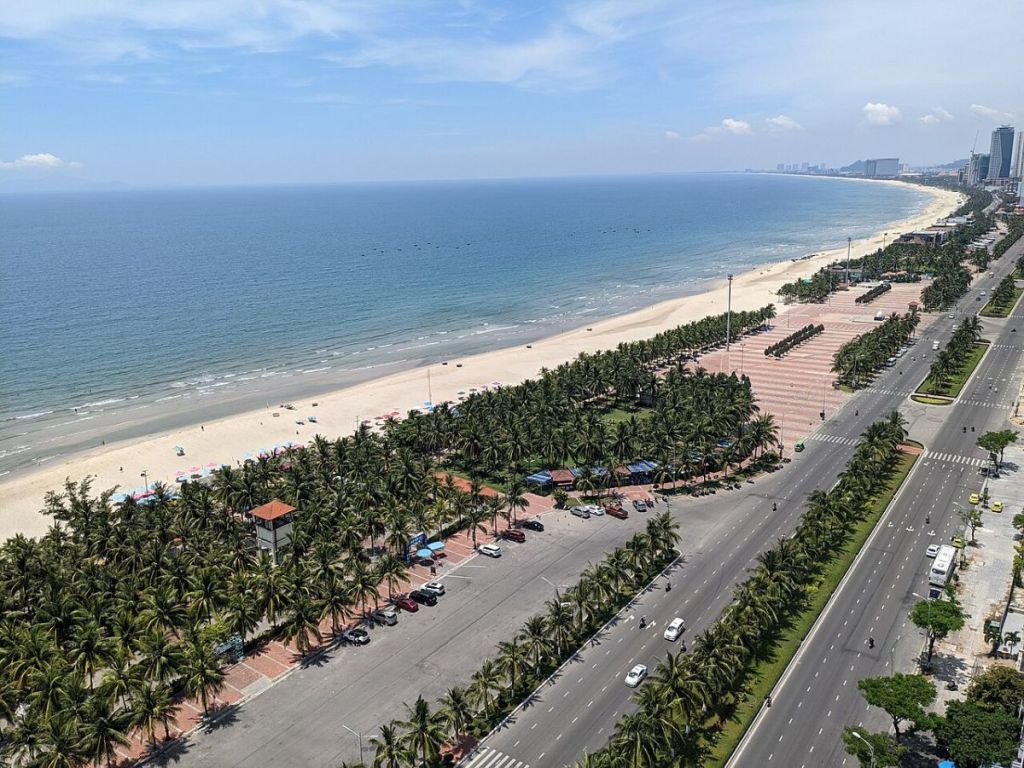
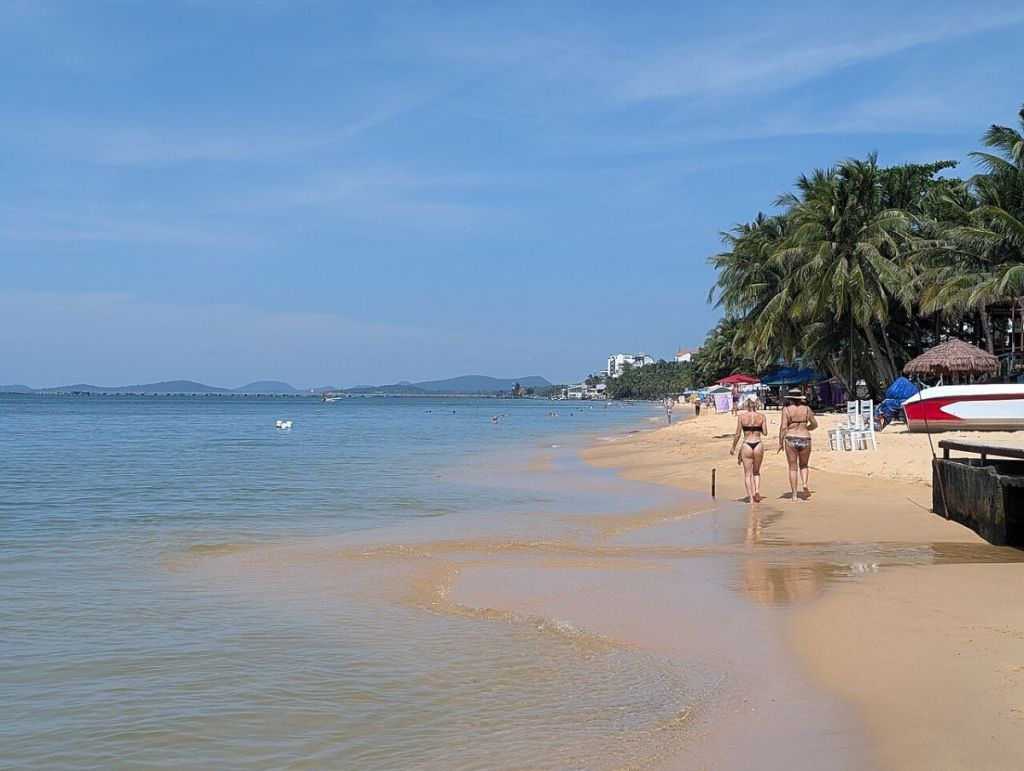
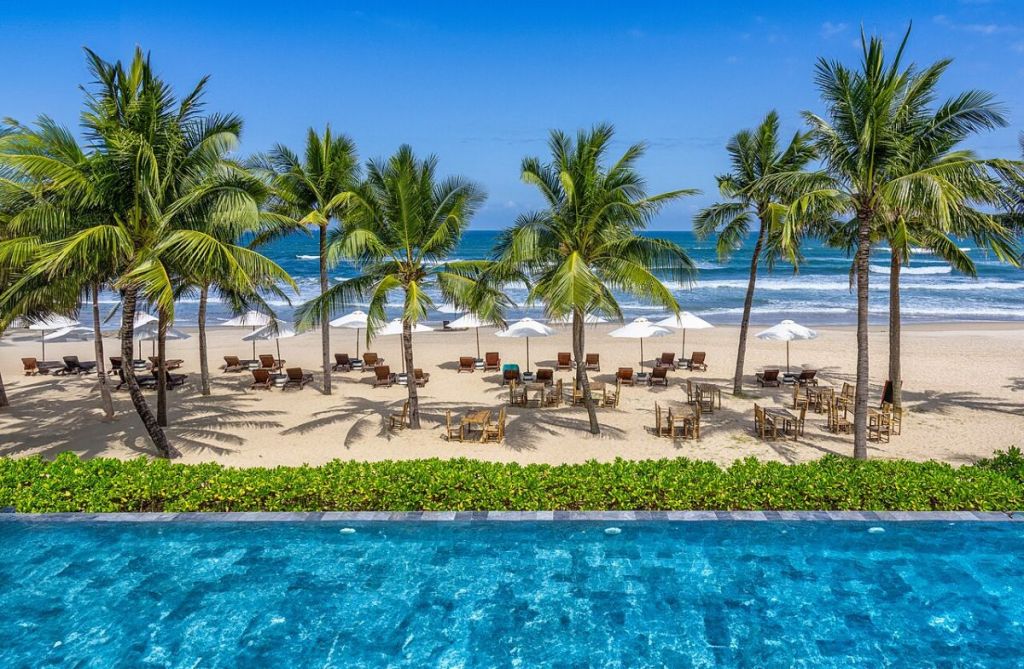
Photos: 1) Jpatokal, CC BY-SA 4.0; 2) Elmschrat, CC BY-SA 4.0; 3) Balou46, CC BY-SA 3.0; via Wikimedia Commons.
Which northern beaches are worth the trip?
The northern beaches most worth the trip are Tra Co and Quan Lan in Quang Ninh and Sam Son in Thanh Hoa, and all three are summer-only destinations, best from May to August. They are less polished than the resort coasts farther south, but they are close to Hanoi and give a good picture of how Vietnamese families take a beach vacation.
Tra Co (Trà Cổ) and Quan Lan (Quan Lạn), Quang Ninh
Quang Ninh is known for the limestone islands of Ha Long Bay (Vịnh Hạ Long), but the bay itself has few natural sandy beaches. For real sand you go farther out. Tra Co, near the border town of Mong Cai (Móng Cái), is a long, flat, hard-packed beach backed by casuarina trees, with a low-key local atmosphere. Quan Lan is an island in Bai Tu Long Bay (Vịnh Bái Tử Long) with wide, pale beaches and simple guesthouses; boats leave from the Van Don (Vân Đồn) area, and schedules change with the season, so check locally before you set off.
Van Don is the nearest airport for both, and most travelers still arrive by road from Hanoi or Ha Long City. Expect cool, cloudy weather outside summer, and keep an eye on storm warnings in July and August, when boat services to the islands can be suspended at short notice.
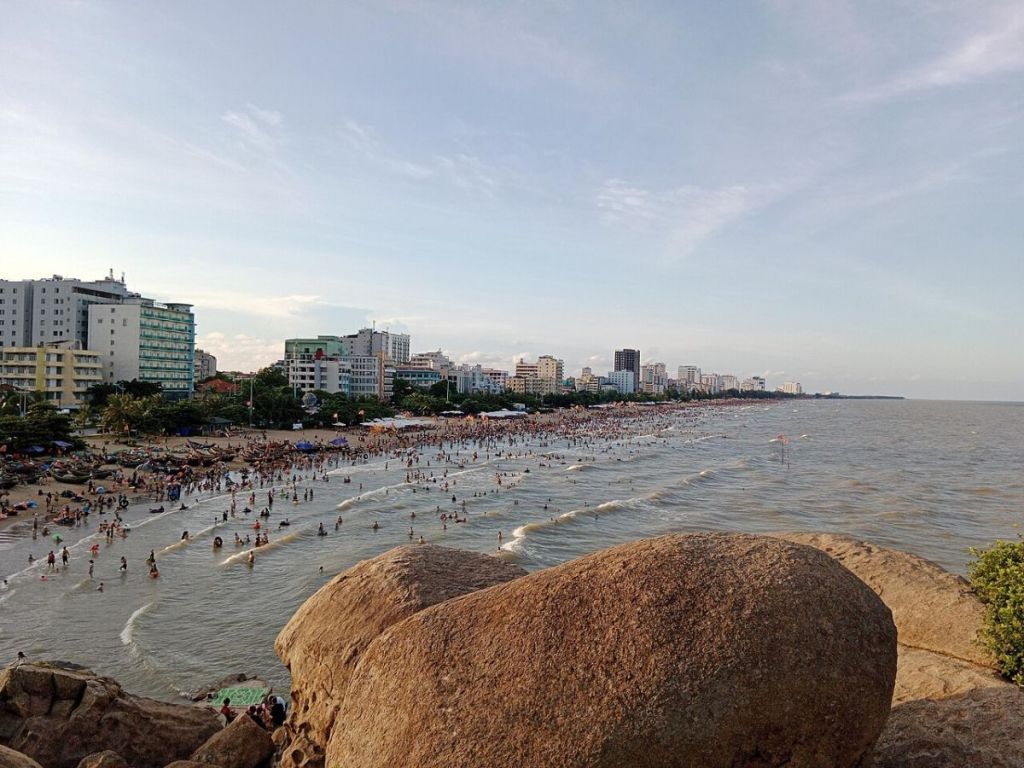
Sam Son (Sầm Sơn), Thanh Hoa
Sam Son is the classic weekend beach for Hanoi. It is about 180 km from the capital, a little over two hours by car on the expressway, and about 16 km from Thanh Hoa city; Tho Xuan (Thọ Xuân) airport serves travelers coming from the south. The season peaks from May to August, and the April 30–May 1 holiday is the single busiest time of the year.
A bus from Hanoi’s Giap Bat station costs from about 100,000 VND per person and a train seat roughly 160,000–280,000 VND (as of March 2026, per VnExpress). The waves here are strong, and lifeguards go off duty around midday and again from 5 p.m.; swimming is not allowed during those hours. The beach is divided into lettered zones: A and B are the busiest and most expensive, while rooms 500–700 m back from the sand cost noticeably less. Ask the price of anything that is not on a printed menu before you order.
Which are the best beaches in Vietnam’s central region?
The best beaches in Vietnam’s central region are Lang Co near Hue, My Khe in Da Nang, An Bang near Hoi An, and Ky Co and Bai Xep near Quy Nhon, and all of them are at their best between March and August. This stretch has the easiest flight connections in the country outside Hanoi and Saigon, which makes it the natural choice for a spring or summer trip.
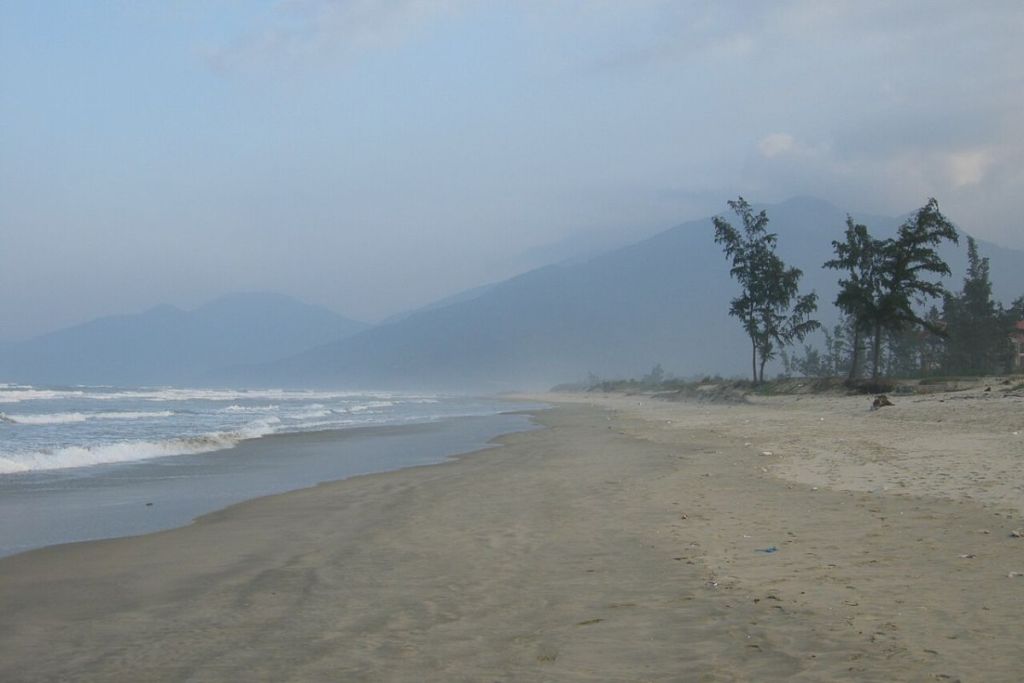
Lang Co (Lăng Cô), Hue
Lang Co sits at the northern foot of the Hai Van Pass (Đèo Hải Vân), on a strip of sand between the sea and a wide lagoon. It belongs to Hue city, which was not changed by the 2025 mergers. Travelers reach it from either Phu Bai airport in Hue or Da Nang airport, and it is a common lunch-and-swim stop on the drive between the two cities. The swimming season is roughly April to August; outside those months the sea is often rough and resorts may close sections of beach.
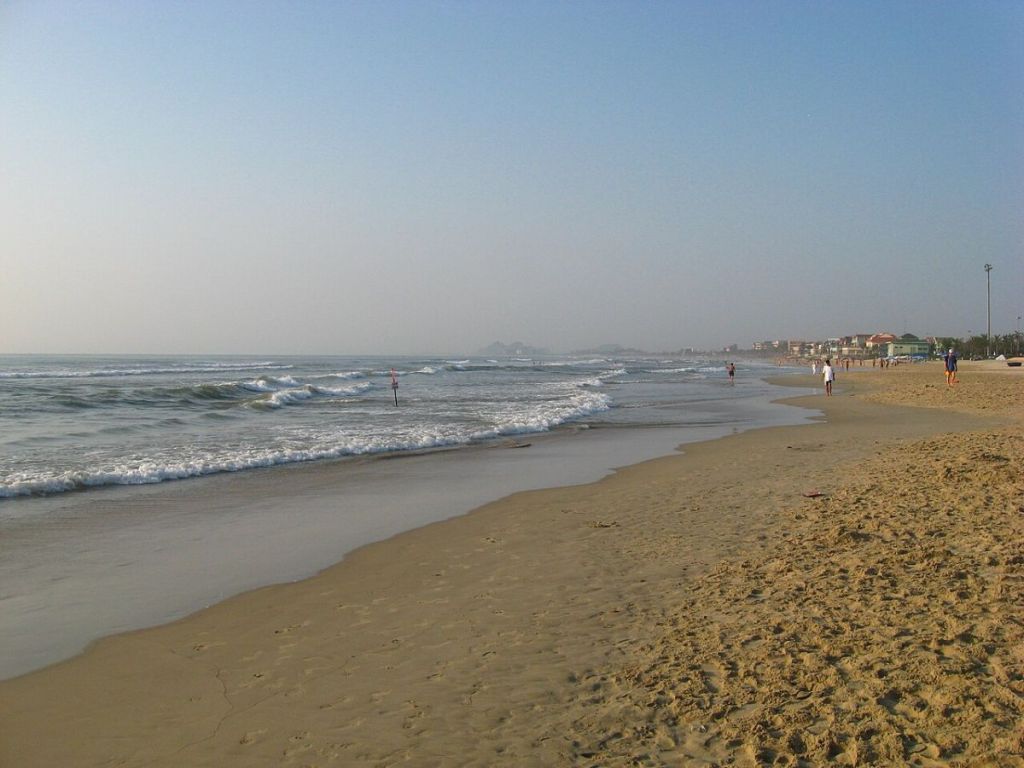
My Khe (Mỹ Khê), Da Nang
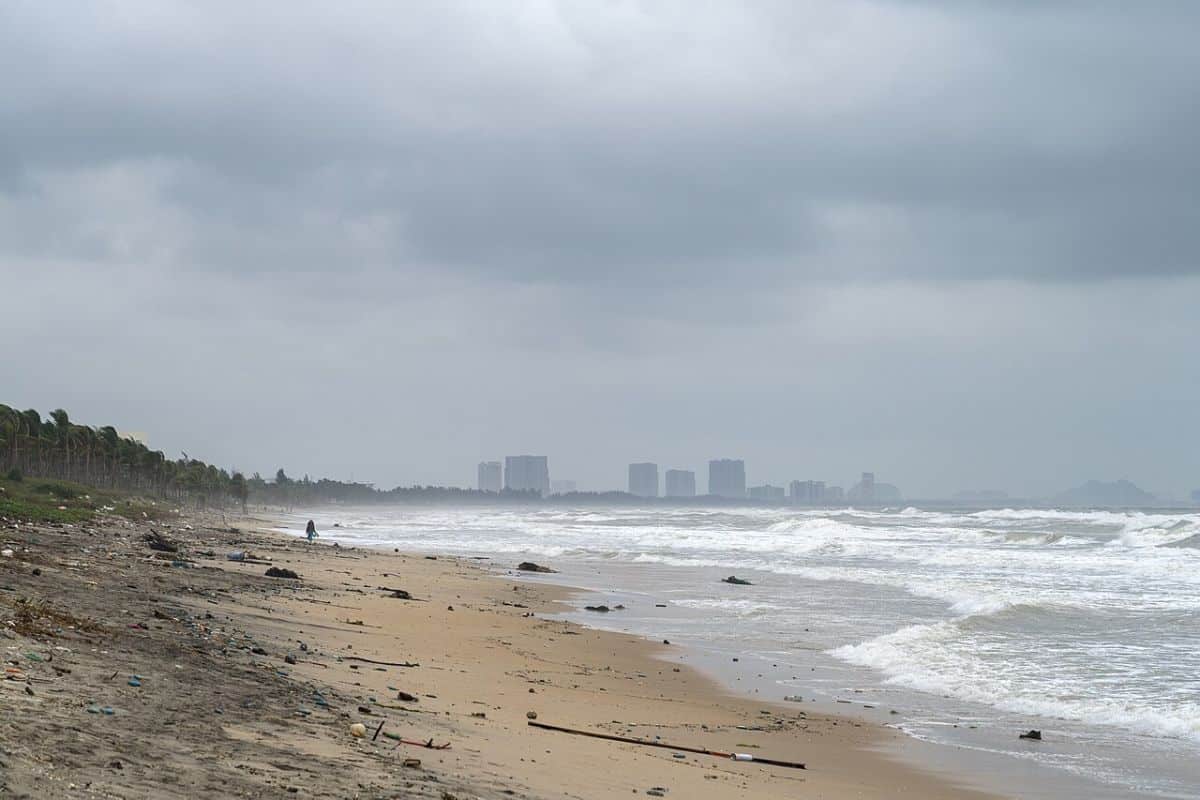
My Khe is the most convenient city beach in Vietnam. The northern end is about 3 km from Da Nang International Airport, roughly 10–15 minutes by car, and a long promenade runs behind the sand with hotels, seafood restaurants and cafes. The sea is swimmable from April to August, and May to August brings the flattest, warmest water and the fullest lifeguard cover, typically from about 6 a.m. to 6 p.m.
Da Nang uses a clear flag system: a red flag means no swimming, yellow means caution, and a pair of red-and-yellow flags marks the supervised zone. Rip-current risk is high from September to December and at its worst in October and November, when parts of the beach are closed. Jellyfish turn up occasionally in the warmest weeks; stings are usually minor but uncomfortable. A lounger with an umbrella costs about 100,000–200,000 VND per day and motorbike parking about 10,000–20,000 VND (as of October 2026); public showers are available for a small fee near the central section.
Photos: 1) Bách Trần, CC0; 2) Vyacheslav Argenberg, CC BY 4.0; 3) Dragfyre, CC BY-SA 3.0; 4) Alexkom000, CC BY 4.0; via Wikimedia Commons.
An Bang (An Bàng), Hoi An
An Bang is the beach most visitors to Hoi An (Hội An) end up at, a short taxi or bicycle ride from the Old Town. Since July 2025, Hoi An and the rest of the former Quang Nam province have been part of Da Nang city, so you will increasingly see “Da Nang” on addresses here. The beach is lined with small restaurants that provide loungers in exchange for a food or drink order, which makes it an easy place to spend half a day. March to August is the swimming season, with April to June usually the calmest; from September onward, waves and erosion can be severe.
Ky Co (Kỳ Co) and Bai Xep (Bãi Xép), Quy Nhon
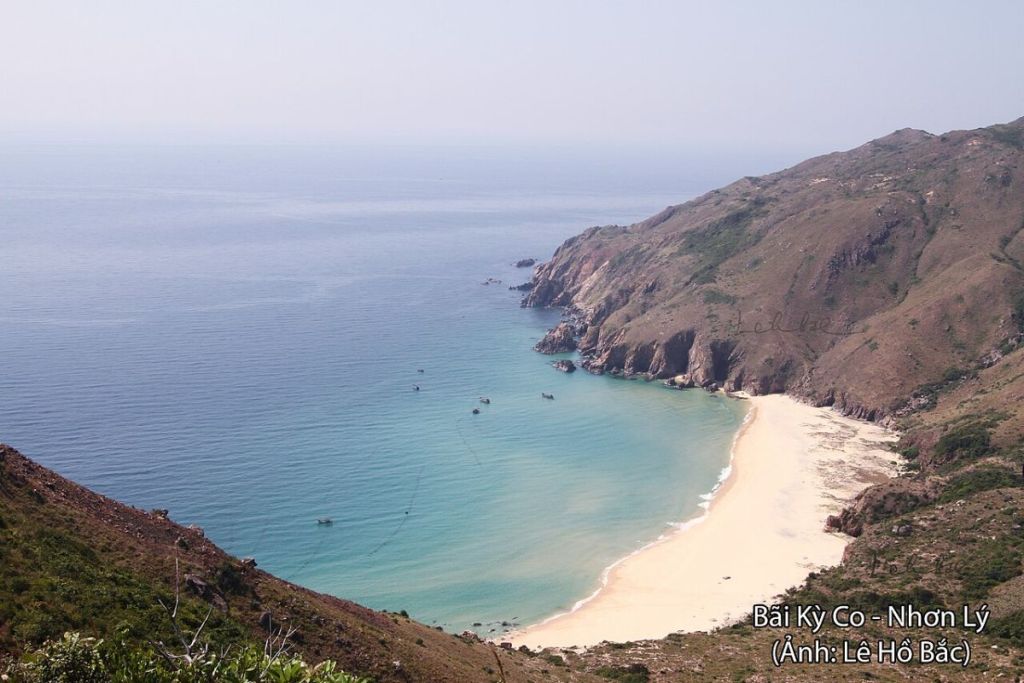
Quy Nhon (Quy Nhơn) was the capital of Binh Dinh province until the 2025 merger placed it in Gia Lai. It is quieter than Da Nang or Nha Trang, with a long town beach and Phu Cat (Phù Cát) airport inland to the north-west. Ky Co lies about 25 km north-east of the city on the Phuong Mai peninsula: a small bay of pale sand and clear blue-green water framed by rock. Most visitors combine it with the Eo Gio (Eo Gió) cliff walk next door.
Entry to Ky Co costs about 100,000 VND per person and to Eo Gio about 25,000 VND; a speedboat transfer is about 360,000–390,000 VND and a slower wooden boat about 150,000 VND (as of December 2025, reference prices that vary by vendor). February to August is the best period. Bai Xep, a short drive south of the city, is a small fishing-village cove with a handful of guesthouses and a slower pace, good for travelers who would rather read a book than join a boat tour.
What makes the south-central coast different?
The south-central coast is different because it is the driest part of Vietnam’s shoreline, with a longer run of sunny weather than either the north or the far south. Nha Trang, Cam Ranh, Ninh Chu, Vinh Hy and Mui Ne all sit on this stretch, and between them they cover city beaches, airport-side resorts, coral bays and the country’s main kitesurfing spot.
Nha Trang (Trần Phú Beach), Khanh Hoa
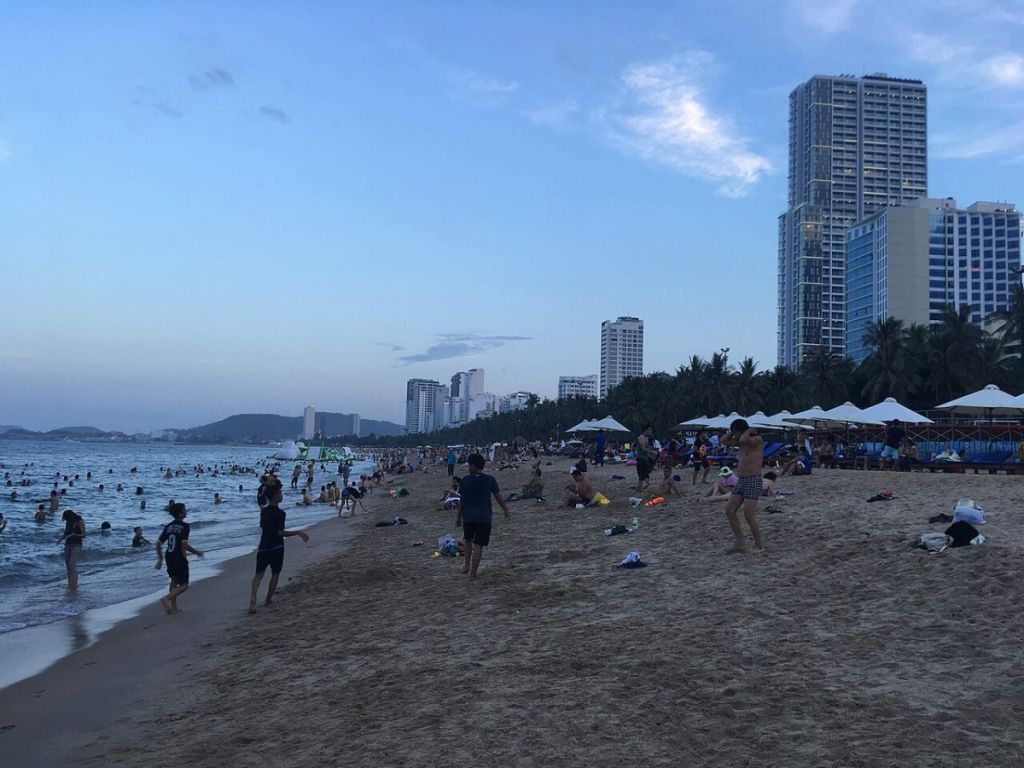
Nha Trang’s main beach curves along Tran Phu street in the middle of the city, so you can walk from a hotel to the sand to a restaurant without needing transport. The swimming season runs from March to August; the wettest months are usually October to December. Cam Ranh International Airport is the gateway, roughly 35 km to the south. Boat trips to the nearby islands are the main activity beyond the beach itself, and the water offshore is generally clearer than at the city shoreline.
Bai Dai (Bãi Dài), Cam Ranh
Bai Dai, “Long Beach,” runs along the Cam Ranh peninsula right beside the airport. It is a wide, gently shelving beach now lined with large resorts, and it suits travelers who want to step off a flight and be in the water within the hour. Public access points exist between the resorts, with simple seafood shacks; ask your driver for the public beach if you are not staying in a resort.
Ninh Chu (Ninh Chữ) and Vinh Hy (Vĩnh Hy)
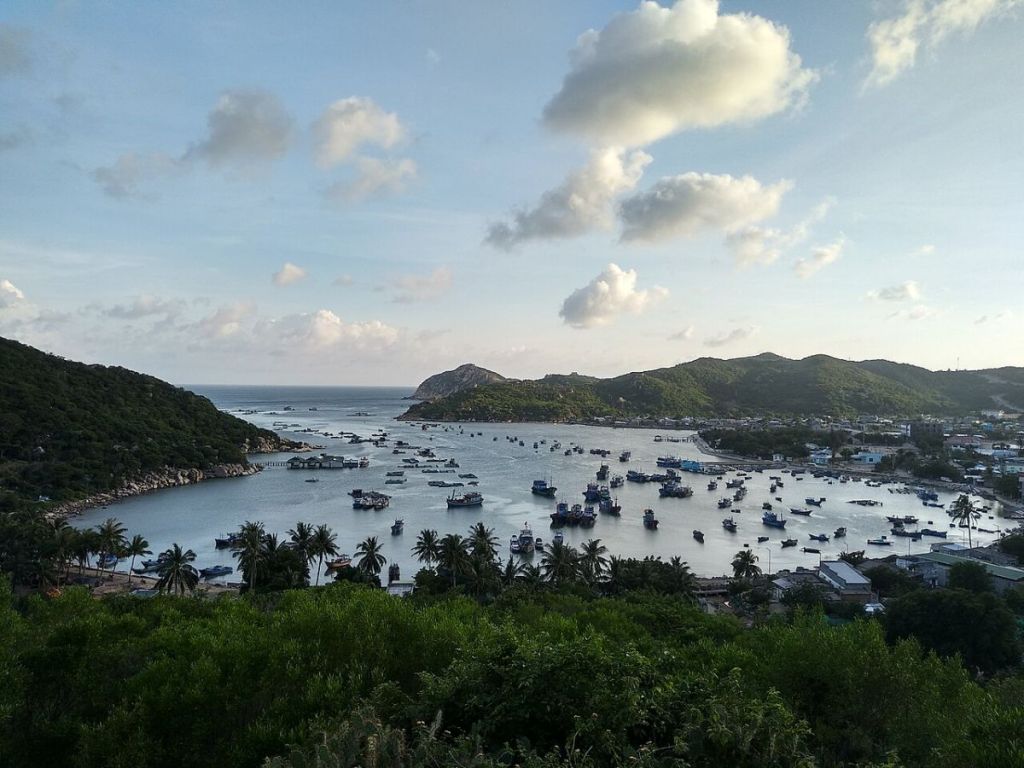
These two belonged to Ninh Thuan province until July 2025, when Ninh Thuan was absorbed into Khanh Hoa. The area is known as one of the driest in Vietnam, with vineyards, salt fields and cactus-covered hills. Ninh Chu is a broad crescent of sand near the town of Phan Rang (Phan Rang–Tháp Chàm). Vinh Hy is a small bay farther north inside Nui Chua National Park (Vườn quốc gia Núi Chúa), reached by a coastal road with long sea views; from Cam Ranh airport the drive to the Vinh Hy pier takes roughly one to two hours.
The usual way to see Vinh Hy is a glass-bottom boat over the coral. A shared boat costs about 80,000 VND per adult and 60,000 VND per child aged 5–11, including a reef conservation fee of about 20,000 VND, and a private boat for four people starts at about 700,000 VND (as of August 2025; prices are higher on public holidays). May to August has the calmest sea and the clearest water.
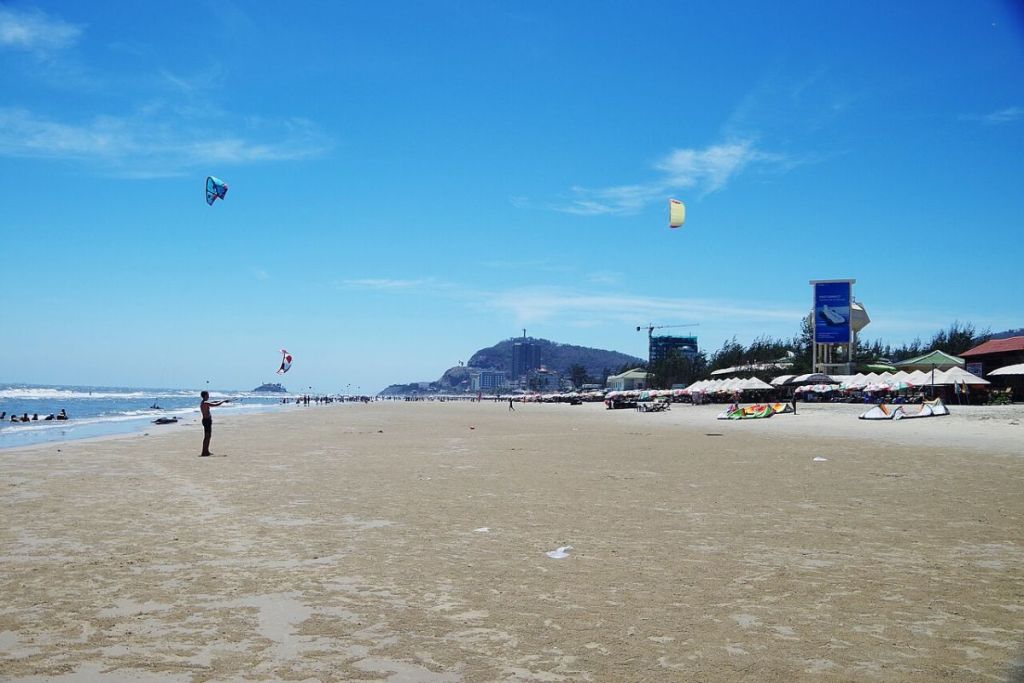
Mui Ne (Mũi Né), Phan Thiet
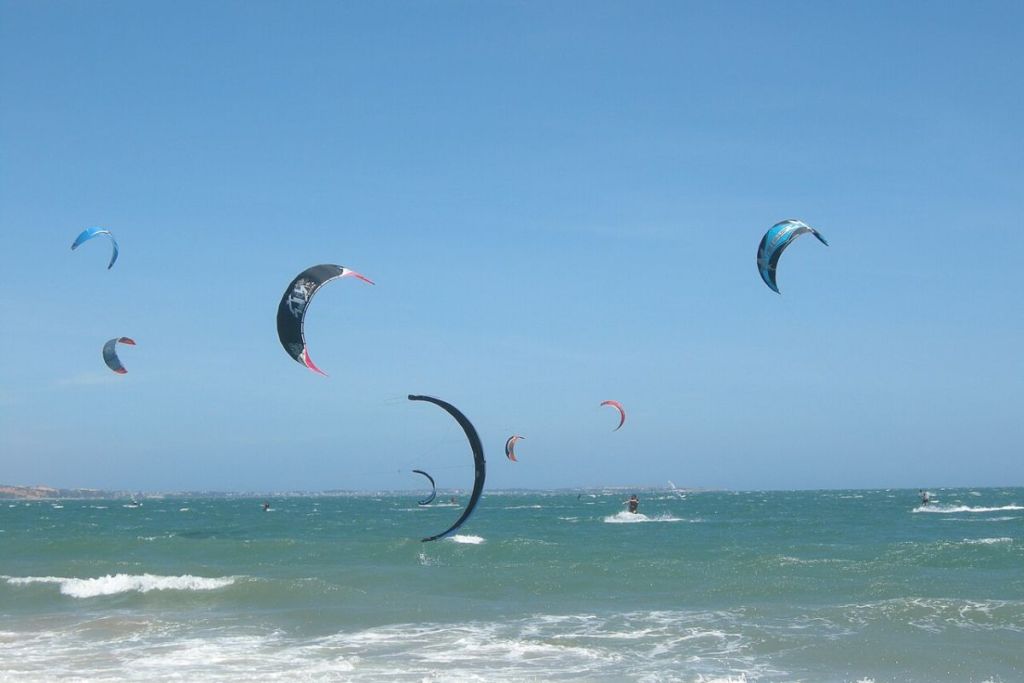
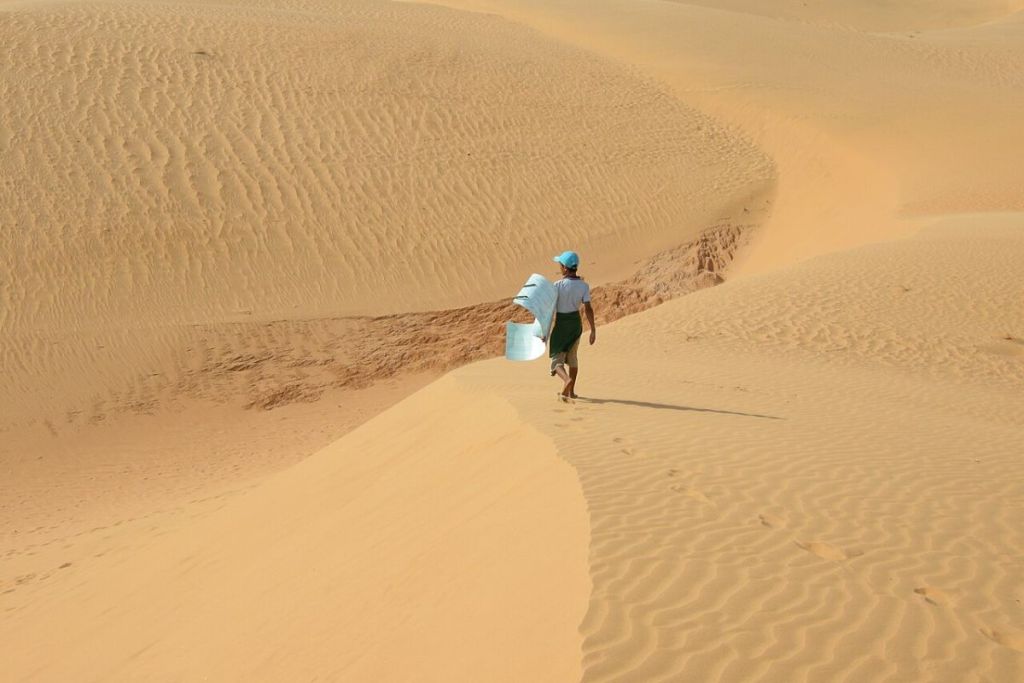
Mui Ne and the city of Phan Thiet (Phan Thiết) were part of Binh Thuan province, which merged into Lam Dong in 2025. The resort strip is about four hours from Ho Chi Minh City by limousine bus or private transfer, or you can take a train to Phan Thiet and a taxi from there. Mui Ne is as much about wind and sand dunes as about swimming. From November to March the north-east trade winds usually arrive by mid-morning and often reach 20–25 knots, with February and March considered the best months for kitesurfing. From May to September the wind drops to roughly 10–14 knots, and April and October are unreliable.
For swimmers, that windy season means choppy water and a lot of kites overhead in the afternoon, so early morning is usually the better time for a dip. Some stretches collect rubbish after storms, and water shoes are a sensible thing to pack.
Photos: 1) Lê Hồ Bắc, CC BY-SA 4.0; 2) Christophe95, CC BY-SA 4.0; 3) Karel Bilek, CC BY-SA 4.0; 4) Vyacheslav Argenberg, CC BY 4.0; 5) Vyacheslav Argenberg, CC BY 4.0; via Wikimedia Commons.
Which beaches are closest to Ho Chi Minh City?
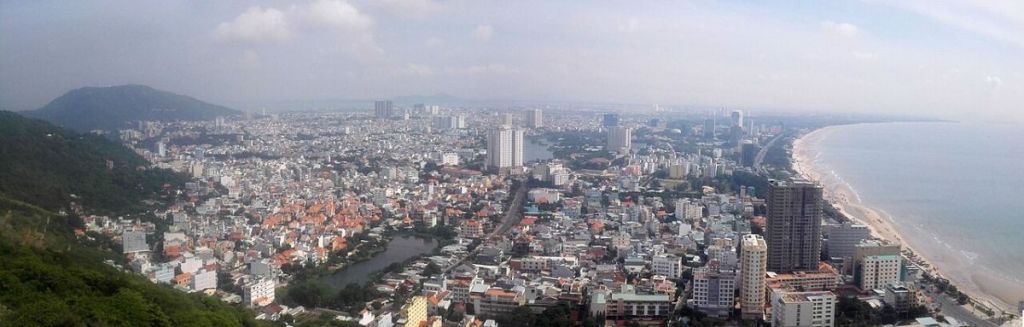
The beaches closest to Ho Chi Minh City are Vung Tau’s Back Beach and Front Beach, about 100 km from the center, followed by Ho Tram and Ho Coc a little farther up the coast. All of them were in Ba Ria-Vung Tau province until July 2025 and are now administratively part of Ho Chi Minh City, which means the city finally has a coastline of its own.
Ho Tram (Hồ Tràm) and Ho Coc (Hồ Cốc)
Ho Tram and Ho Coc sit north-east of Vung Tau on a long, straight shoreline backed by forest. The mood is the opposite of a city beach: large resorts set well apart, few shops, and very little traffic at night. Ho Coc has a managed public beach area that charges about 75,000 VND for entry (as listed by Vietnam Airlines’ travel guide, checked November 2026). The open coast here can have strong waves, so swim where the resorts or beach operators have marked a zone. If you are comparing options for a short break, this roundup of beaches near Ho Chi Minh City sets out the differences in distance and atmosphere.
Back Beach (Bãi Sau), Vung Tau
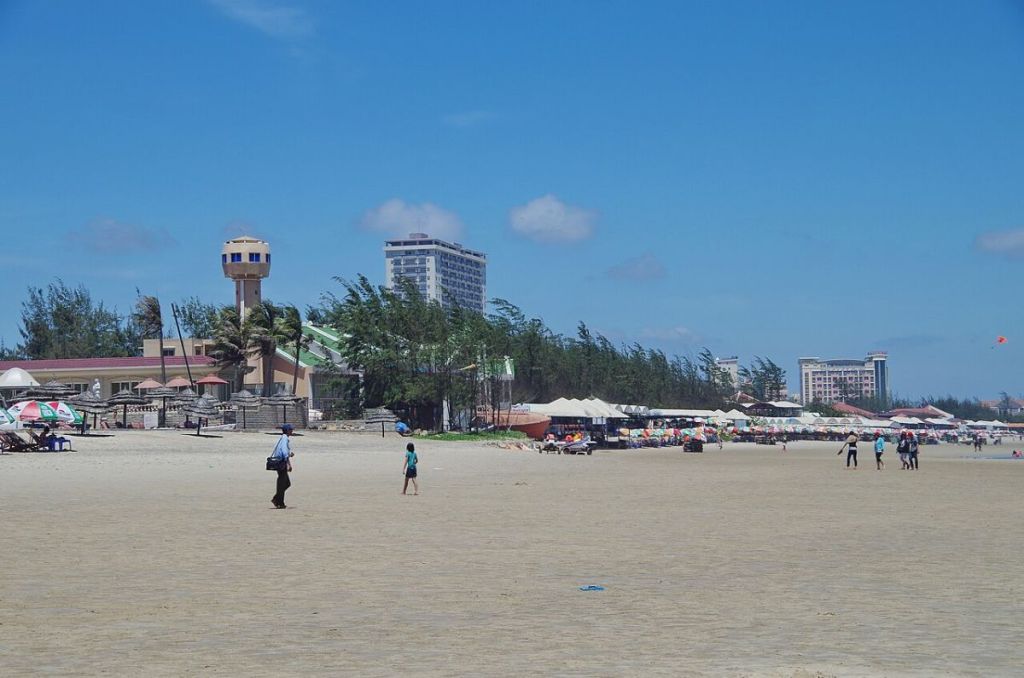
Back Beach is the main swimming beach of Vung Tau (Vũng Tàu) and the reason most people make the trip. It runs for several kilometers along Thuy Van street from the foot of Small Mountain (Núi Nhỏ) toward the Chi Linh area, with a wide band of firm sand, a public park and promenade behind it, and hotels and apartment towers across the road. Entry to the beach is free, and umbrella rental is about 50,000 VND per day (as listed by Vietnam Airlines’ travel guide, checked November 2026); prices for loungers, lockers and freshwater showers vary by operator, so check the posted price board before you sit down.
The water is at its best from December to April, when the sea is calmer and clearer. May to August is still swimmable but brings frequent afternoon rain, and September to November has the poorest water of the year. It is wise to stay out of the sea for 24–48 hours after heavy rain. Jellyfish and sea worms wash ashore in some seasons, depending on heat, currents and tides; in April 2026, local officials told Tuoi Tre newspaper that numbers had dropped sharply and returned to normal before the holiday crowds arrived.
Back Beach faces the open sea, and local media regularly report rescues here on busy holidays. Lifeguards mark dangerous spots with warning flags and signs, and floating barriers mark the swimming zones; stay between them, and do not follow other swimmers past the markers just because the water looks calm.
Front Beach (Bãi Trước), Vung Tau
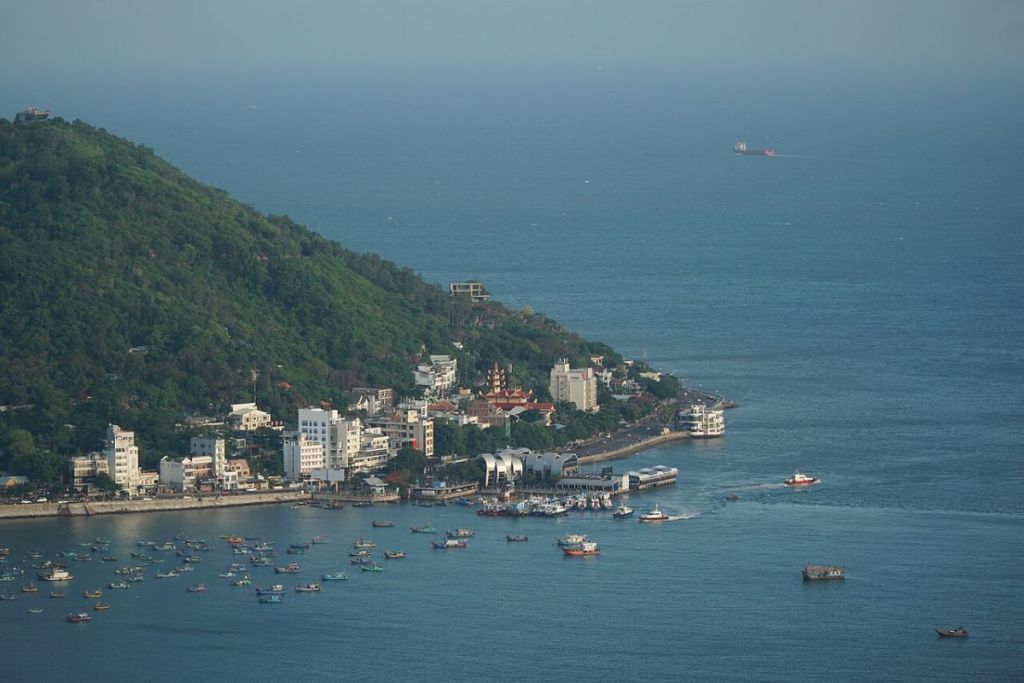
Front Beach faces west toward the city center and the harbor. Fishing boats moor here, the water is shallow, and swimming is limited; it is a place for a walk along the park at sunset, a coffee, and a seafood dinner rather than a swim. Two smaller spots complete the picture: Pineapple Beach (Bãi Dứa) is rocky and good for photos, and Mulberry Beach (Bãi Dâu) on the north side is quiet, with few facilities.
Local tip: Vung Tau changes character on weekends. From Friday afternoon to Sunday evening the buses are full, Back Beach fills with families from Saigon, and room prices climb. From Monday to Thursday the sand is close to empty and many places charge roughly 30–50% less. If you can travel midweek, do.
Planning a beach break in Vung Tau? Oasky Vung Tau has serviced apartments with two to five bedrooms close to Back Beach, many with sea views, so families and groups can stay together and cook when they like. Send us your dates and group size and we will suggest a layout.
Photos: 1) Balou46, CC BY-SA 3.0; 2) NDTK08, CC BY 4.0; 3) Pieceofmetalwork, CC BY-SA 4.0; 4) Syced, CC0; via Wikimedia Commons.
How do you get from Saigon to Vung Tau?
You get from Saigon to Vung Tau by limousine van, bus, private car or fast boat, and every option takes between about 1.5 and 3 hours. The distance is roughly 100 km, which is why Vung Tau works as a day trip as well as a weekend away.
- Limousine van: about 2–2.5 hours from District 1, District 7 or the airport, roughly 180,000–250,000 VND per seat, with departures every 30–60 minutes at busy times (as of September 2026).
- Standard bus: about 2.5–3 hours from Mien Dong bus station, roughly 120,000–180,000 VND (as of September 2026).
- Fast boat: about 1.5–2 hours from Bach Dang Wharf (Bến Bạch Đằng) in District 1 down the Saigon River and across the bay, roughly 250,000–350,000 VND (as of September 2026). Sailings depend on tide and weather.
- Private car with driver: often 70–90 minutes outside rush hour, roughly 1.2–1.8 million VND per car for up to four passengers (as of September 2026).
Fares move with fuel prices, weekends and holidays, so treat these as a guide and confirm when you book. For pick-up points, operators and current timetables, see this guide to getting from Saigon to Vung Tau. If you like the idea of arriving by water, our guide to Bach Dang Wharf and the fast boat explains where to check in and what the ride is like.
A note on airports: Tan Son Nhat (Tân Sơn Nhất) in Ho Chi Minh City remains the airport for Vung Tau, Ho Tram and Mui Ne. Long Thanh International Airport, east of the city and closer to the coast, was scheduled to begin commercial operations on December 1, 2026, according to reports from July 2026, starting with a small number of international routes while domestic flights stay almost entirely at Tan Son Nhat. Check which airport your ticket uses before you arrange a transfer.
Local tip: On Sunday afternoons the road back to Saigon is slow. Either leave Vung Tau before lunch, or stay for dinner and travel after 7 p.m. Book return seats when you book the outbound trip, especially around Tet, April 30 and September 2.
Which islands have the best beaches in Vietnam?
The islands with the best beaches in Vietnam are Phu Quoc, for white sand and easy flights, and Con Dao, for empty bays and sea turtles. Both are in the far south and both have their main season from December to April, but they feel very different once you arrive.
Sao Beach (Bãi Sao) and Long Beach (Bãi Trường), Phu Quoc
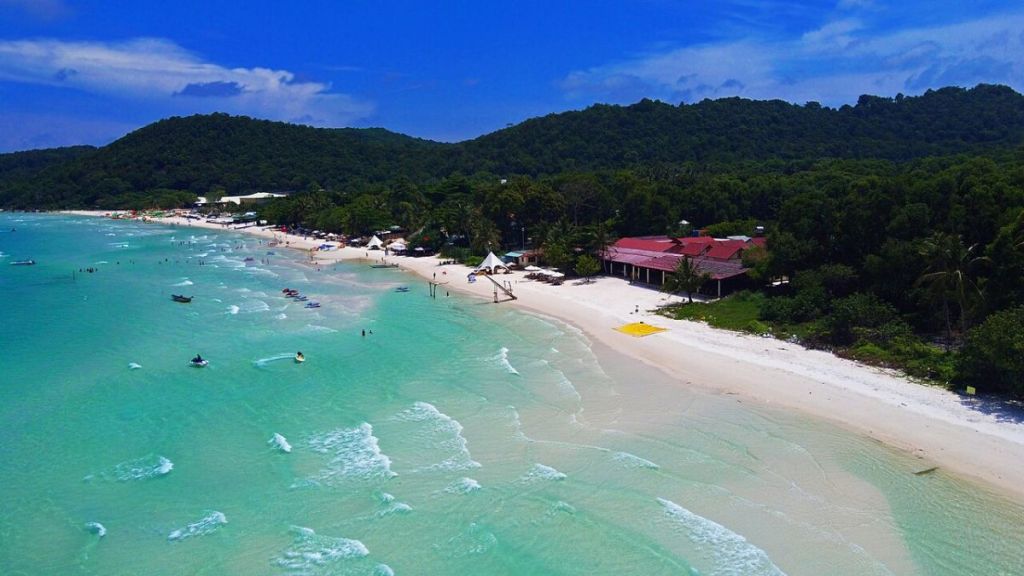
Phu Quoc (Phú Quốc) was a city of Kien Giang province; after the 2025 merger it became a special zone of An Giang. It has its own international airport, and the island-wide dry season runs from December to April, with January to March the peak. Long Beach stretches down the west coast south of the main town of Duong Dong (Dương Đông); it faces the sunset, is lined with resorts and beach bars, and is usually calm through the dry season.
Sao Beach is on the south-east coast, about 25 km south of Duong Dong near An Thoi (An Thới). Its sand is the palest and finest on the island and the water is shallow a long way out. Visitors in early 2026 reported an entry charge of about 60,000 VND per person, which some restaurants credit against food and drink; loungers, hammocks and swings cost extra. Because it faces east, Sao Beach is often calmer from May to October, which is Phu Quoc’s rainy season, and gets more waves from late October to early May, particularly around midday. Starfish are common close to shore in September and October; look, but leave them in the water.
Con Dao (Côn Đảo)
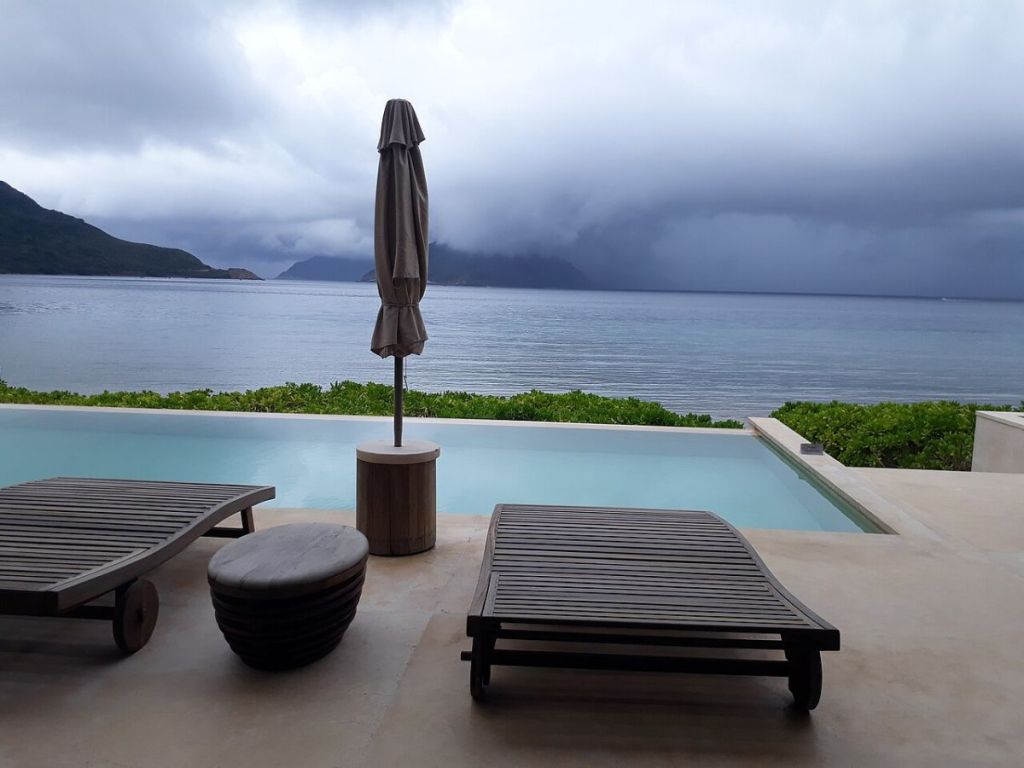
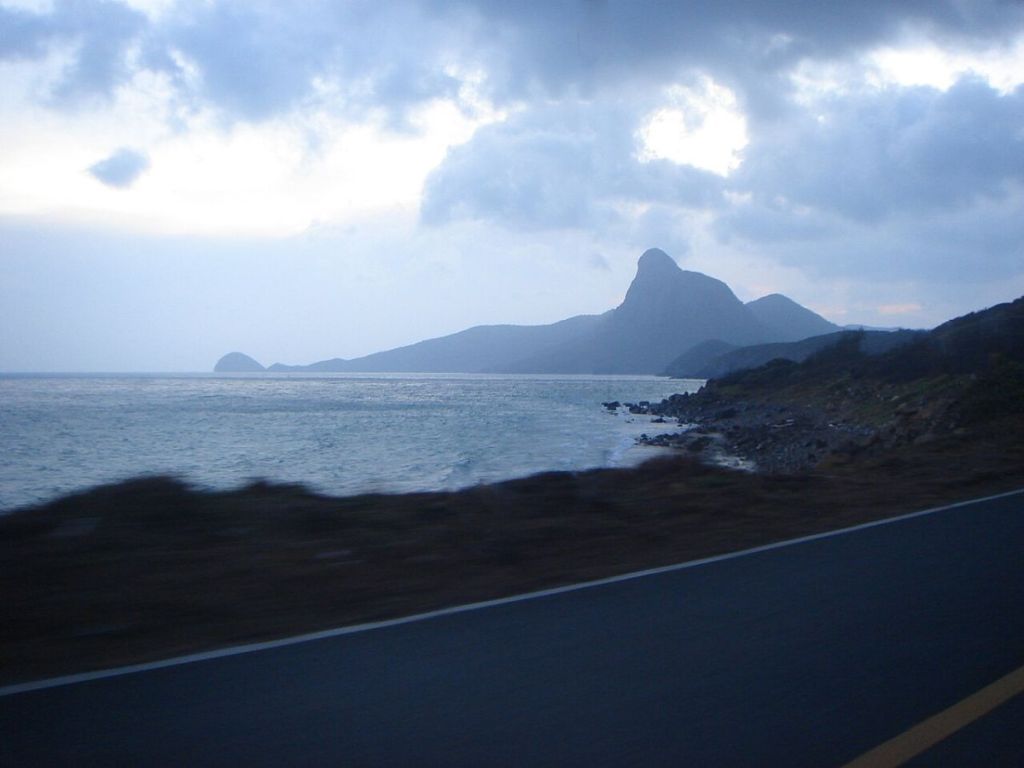
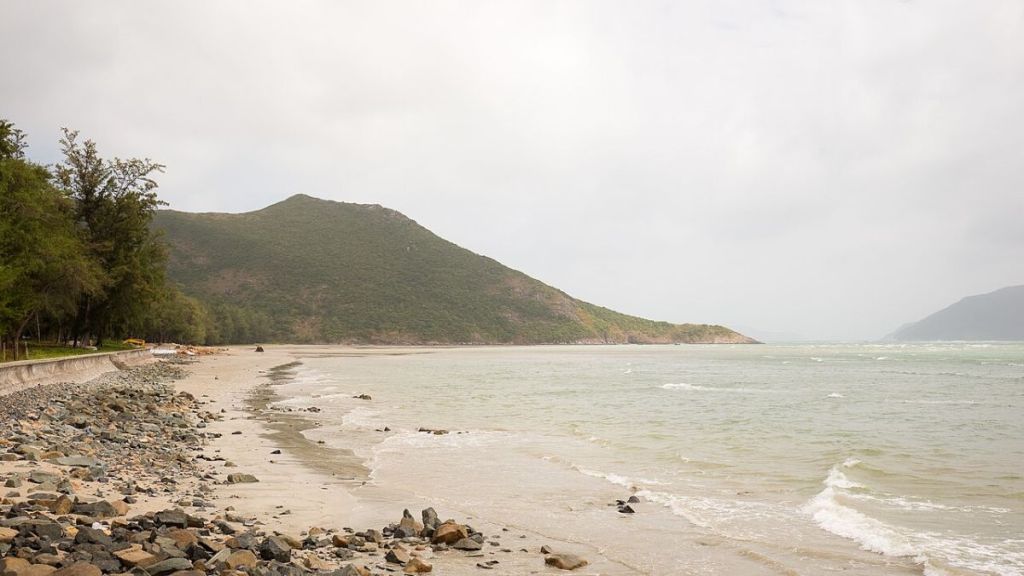
Con Dao is a small group of islands well off the southern coast. It was a district of Ba Ria-Vung Tau and now belongs to Ho Chi Minh City. Most of the land and surrounding sea is national park, development is limited, and beaches such as Dam Trau (Đầm Trầu), near the airport, and An Hai (An Hải), in the main town, are often close to empty. Sea turtles nest here from April to September.
Flights from Tan Son Nhat take about 45 minutes on small turboprop aircraft and cost roughly 1.6–2.5 million VND one way (as of September 2026), with more on weekends and holidays. The fast ferry from Vung Tau’s Cau Da port takes about 4–5 hours and costs roughly 800,000–1,250,000 VND; from Tran De (Trần Đề) in the Mekong Delta it takes 2–2.5 hours and costs roughly 370,000–590,000 VND (as of September 2026). All ferries arrive at Ben Dam (Bến Đầm) port, 10–15 km from town. The sea is calmest in March and April and roughest from October to February, when cancellations are common, so in those months flying is the safer plan.
Photos: 1) Trantuonglam, CC BY-SA 4.0; 2) Alexey Komarov, CC BY-SA 4.0; 3) Daeva Trạc, CC BY-SA 4.0; 4) Terminalwlyonline, CC BY 4.0; 5) Tycho, CC BY-SA 3.0; via Wikimedia Commons.
How do you stay safe on Vietnamese beaches?
You stay safe on Vietnamese beaches by swimming only inside marked, lifeguarded zones, obeying the flags, and staying out of the water at dusk, at midday when guards are off duty, and after storms. Most accidents happen to visitors who swim outside the markers or go in when a beach has been closed.
- Read the flags. Systems differ by city. In Da Nang, red means no swimming, yellow means caution, and red-and-yellow pairs mark the supervised area. Elsewhere, any warning flag or “no swimming” sign should be taken literally.
- Respect rip currents. Open-ocean beaches such as My Khe, Sam Son, Ho Tram and Back Beach can have strong currents, especially in the off season. If you are caught, float, signal for help, and swim parallel to the shore rather than against the pull.
- Watch the clock. Lifeguards usually work daylight hours and often break at midday. Early morning and late afternoon are the cooler, safer times to swim, and the hours when local families go in.
- Expect jellyfish in some seasons. They appear with warm water and certain currents. Ask lifeguards or beach vendors if there have been any that week, and rinse stings with seawater, not fresh water.
- Protect valuables and skin. Petty theft happens on crowded sand, so leave passports and spare cash at your accommodation. The sun is strong even on cloudy days; reapply sunscreen after every swim.
Useful Vietnamese
- bãi biển (bai bee-en) – beach
- cờ đỏ (kuh daw) – red flag
- cấm tắm (kum tum) – no swimming
- khu vực nguy hiểm (koo vook ngwee hee-em) – danger zone
- áo phao (ow fow) – life jacket
- cứu hộ (kuu haw) – lifeguard / rescue
- sứa (soo-ah) – jellyfish
- tắm nước ngọt (tum nook ngawt) – freshwater shower
- gửi xe (goo-ee seh) – vehicle parking
- bao nhiêu tiền? (bow nyew tee-en) – how much is it?
How should you plan a north-to-south beach route?
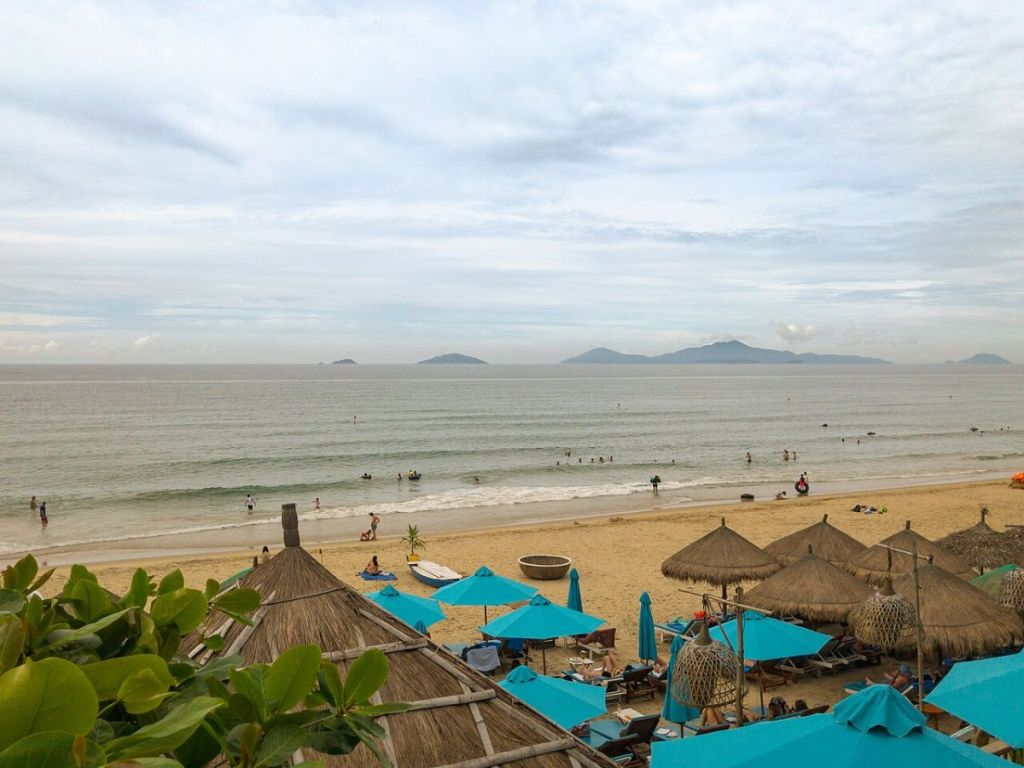
You should plan a north-to-south beach route by choosing one or two regions that are in season and connecting them by air, rather than trying to cover the whole coast overland. Vietnam’s domestic flights are frequent, and Da Nang, Cam Ranh, Ho Chi Minh City and Phu Quoc make convenient anchors.
For a spring or summer trip, a workable pattern is Da Nang and Hoi An first, then a flight or train down to Quy Nhon or Nha Trang, finishing in Ho Chi Minh City with a couple of nights in Vung Tau before the flight home. For a winter trip, reverse the logic: start in Saigon, take the short hop to Vung Tau or Ho Tram, add Mui Ne if you want wind sports, and end with several nights on Phu Quoc or Con Dao. Families with small children tend to do best with fewer moves and beaches that have lifeguards and gentle slopes, such as My Khe in summer or Back Beach in the dry season.
Wherever you go, public holidays change everything. Lunar New Year (Tết), the April 30–May 1 break and National Day on September 2 bring the biggest crowds and the highest prices of the year at every beach in this guide. Book transport and rooms several weeks ahead for those dates, or plan around them.
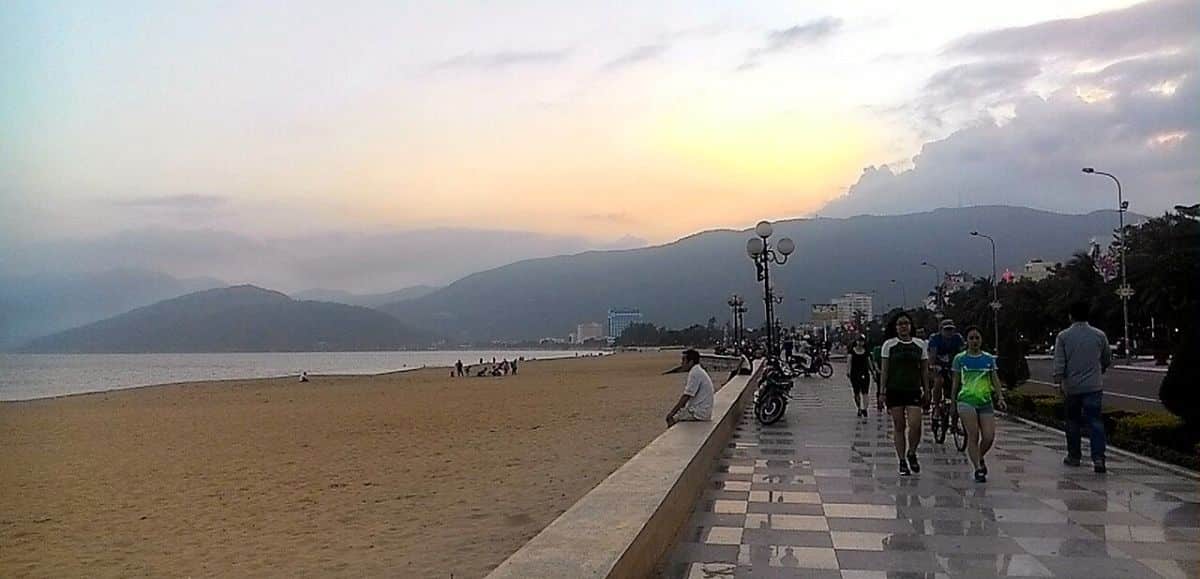
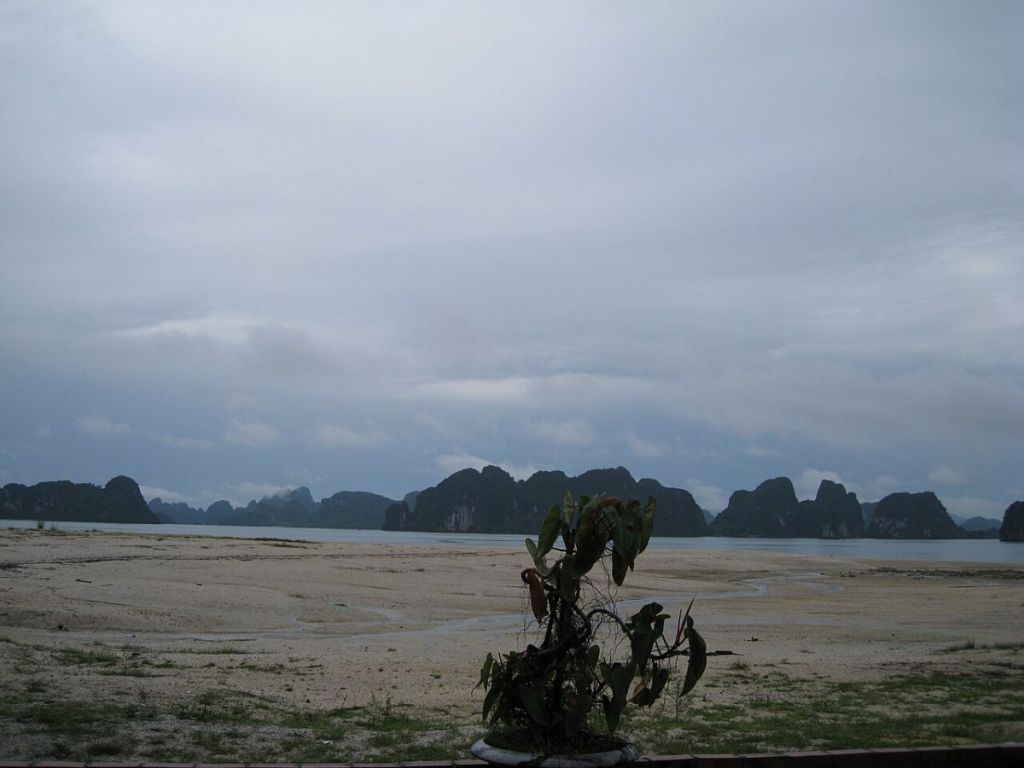
Photos: 1) dronepicr, CC BY 2.0; 2) VeeWin, CC BY-SA 4.0; 3) Viethavvh, CC BY-SA 3.0; via Wikimedia Commons.
Ending your trip by the sea near Saigon? Oasky Vung Tau offers serviced apartments from two to five bedrooms within easy reach of Back Beach, a practical base for families and groups of friends who want space and a kitchen. Tell us your travel dates and how many people are coming, and we will check availability.
Frequently Asked Questions
What is the number one beach in Vietnam?
There is no single number one beach in Vietnam, because the answer changes with the season. My Khe in Da Nang is the strongest all-round choice from April to August, while Sao Beach on Phu Quoc and the bays of Con Dao lead in the southern dry season from December to April. Pick by month first, then by the style of trip you want.
Which month is best for a beach vacation in Vietnam?
April is the most flexible month for a beach vacation in Vietnam. The south is still in its dry season, the central coast from Da Nang to Nha Trang has warmed up and calmed down, and typhoon season has not begun. Only the far north is still on the cool side. March and May are close runners-up.
Is Vung Tau good for swimming?
Yes, Vung Tau is good for swimming at Back Beach (Bãi Sau), especially from December to April when the water is calmer and clearer. Swim inside the marked zones, follow lifeguard flags, and avoid the sea for a day or two after heavy rain. Front Beach (Bãi Trước) is a harbor and better for sunsets than swimming.
How far is Vung Tau from Ho Chi Minh City?
Vung Tau is about 100 km south-east of central Ho Chi Minh City. A limousine van takes roughly 2–2.5 hours, a standard bus 2.5–3 hours, and the fast boat from Bach Dang Wharf about 1.5–2 hours. Since July 2025, Vung Tau has been administratively part of Ho Chi Minh City, although it remains a separate seaside town on the ground.
Is Da Nang or Nha Trang better for beaches?
Da Nang is better for a clean, well-supervised city beach close to the airport, and Nha Trang is better for island boat trips. Both share a similar season, roughly March to August. Da Nang also puts Hoi An and Lang Co within easy reach, while Nha Trang connects well to Cam Ranh’s Bai Dai and to Vinh Hy Bay.
When is typhoon season in Vietnam?
Typhoon season in Vietnam usually runs from July to November. Storms tend to affect the north earlier in the season and the central coast later, with September to November the riskiest period from Hue down to Quy Nhon. The south is rarely hit directly, though it can see rough seas and canceled ferries when a storm passes farther north.
Are there jellyfish on Vietnamese beaches?
Yes, jellyfish appear on Vietnamese beaches from time to time, mostly in warmer weeks and depending on currents and tides. At My Khe they are occasional, and at Vung Tau’s Back Beach they wash ashore in some seasons and then disappear again. Stings are usually minor. Ask lifeguards about current conditions, and rinse any sting with seawater.
Do you have to pay to enter beaches in Vietnam?
No, most public beaches in Vietnam are free to enter, including My Khe, An Bang and Vung Tau’s Back Beach. A few managed or boat-access beaches charge: Ky Co is about 100,000 VND (as of December 2025), Sao Beach about 60,000 VND (as of early 2026), and Ho Coc about 75,000 VND. Loungers, umbrellas, showers and parking cost extra almost everywhere.
Is Phu Quoc or Con Dao better?
Phu Quoc is better for convenience and Con Dao is better for quiet. Phu Quoc has an international airport, a wide choice of resorts, restaurants and activities, and beaches for every budget. Con Dao has far fewer visitors, protected national park scenery and nesting sea turtles, but flights are limited and ferries are often canceled in rough weather from October to February.
When is the best time for kitesurfing in Mui Ne?
The best time for kitesurfing in Mui Ne is November to March, with February and March considered the peak. North-east trade winds usually pick up by mid-morning and often reach 20–25 knots. From May to September the wind is lighter, around 10–14 knots, and April and October are transition months when it can drop away for days.
Which Vietnamese beaches are best for families with young children?
The best beaches for families with young children are those with gentle slopes, lifeguards and facilities close by. My Khe in Da Nang from May to August, Vung Tau’s Back Beach from December to April, and Long Beach or Sao Beach on Phu Quoc in the dry season all fit. Choose accommodation within walking distance so nap times and meals stay simple.
Did Vietnam’s province mergers change where the beaches are?
No, the beaches have not moved, but several province names have. Since July 1, 2025, Vung Tau, Ho Tram and Con Dao are in Ho Chi Minh City, Quy Nhon is in Gia Lai, Ninh Chu and Vinh Hy are in Khanh Hoa, Mui Ne is in Lam Dong, Hoi An is in Da Nang, and Phu Quoc is in An Giang. Older maps and booking sites may still show the former names.
Sources
- Vietnam National Authority of Tourism (vietnam.travel) – Vietnam’s new provincial system: 34 names to know (in French)
- Local Vietnam – Best time to visit Vietnam: travel and weather overview (updated January 2026)
- Local Vietnam – Ferry to Con Dao (updated March 2026)
- VnExpress – Sam Son beach travel guide (in Vietnamese, updated March 2026)
- Tuoi Tre – Sea worms and jellyfish drop sharply at Vung Tau beach before the holiday (in Vietnamese, April 2026)
- Tuoi Tre News – Long Thanh airport to launch with four international routes in December (July 2026)
Written by the Oasky Vung Tau team. Last updated November 18, 2026. Beach fees, boat fares and sea conditions change with the season, so please check locally before you travel.

Bài viết liên quan
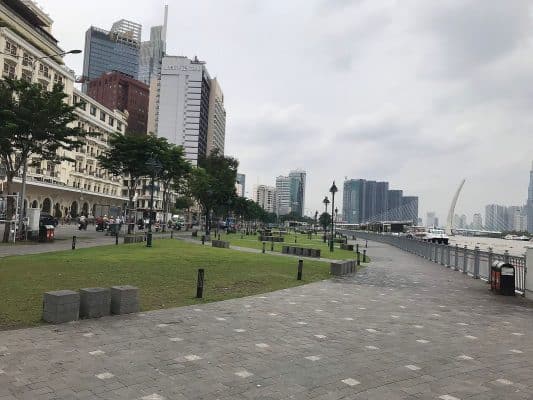
Bach Dang Wharf: Riverside Walks, Ferries and the Boat to Vung Tau
Bach Dang Wharf is the free riverside promenade in central Saigon where the Waterbus and...

Mặt Bằng TT Genesis: Hướng Dẫn Cách Đọc Chi Tiết Từ A–Z
Mặt bằng TT Genesis là một trong những tài liệu quan trọng nhất mà khách...

GALAXY TT Genesis – Trạm khai phá gần 1.000 m² có gì đặc biệt?
GALAXY TT Genesis – Trạm khai phá là không gian tiện ích ngoài trời rộng...

Dự án Bcons Center City có Bcons Group có gì đặc biệt?
Bcons Center City là dự án căn hộ do Bcons Group phát triển tại khu...

Pháp Lý Dragon Eden – Toàn Bộ Hồ Sơ Từ Chủ Trương Đến Sổ Đỏ
Pháp lý Dragon Eden gồm đầy đủ các bước của một dự án khu dân...

Ý Nghĩa Thông Điệp “Long Mạch Đất Lành” Của Dragon Eden
“Long Mạch Đất Lành” là thông điệp thương hiệu của Dragon Eden, thể hiện sự...

TT Genesis by TT Capital có gì đặc biệt tại Nam Sài Gòn?
Giữa thị trường căn hộ ngày càng đa dạng tại khu Nam TP.HCM, TT Genesis...

The Privé Có Cho Nuôi Thú Cưng Không?
The Privé có cho nuôi thú cưng không? Đây là câu hỏi được nhiều khách...